VERSION 2.4 · FOUNDER REVIEWPre-launch · Clinical services not yet available

RESTCARE · HEALTHCARE ACCESS, BUILT AROUND PEOPLE

Access starts
with listening.
The bridge starts here.

Care can be available.
Reaching it can still be extraordinarily difficult.

RestCare is a technology-enabled healthcare access company being built for overlooked, neurodiverse, developmentally disabled, and medically or behaviorally complex individuals and families.

Beginning in Gwinnett County & Metro Atlanta

THE MOBILE ACCESS VISIONCONCEPT / FUTURE VISION
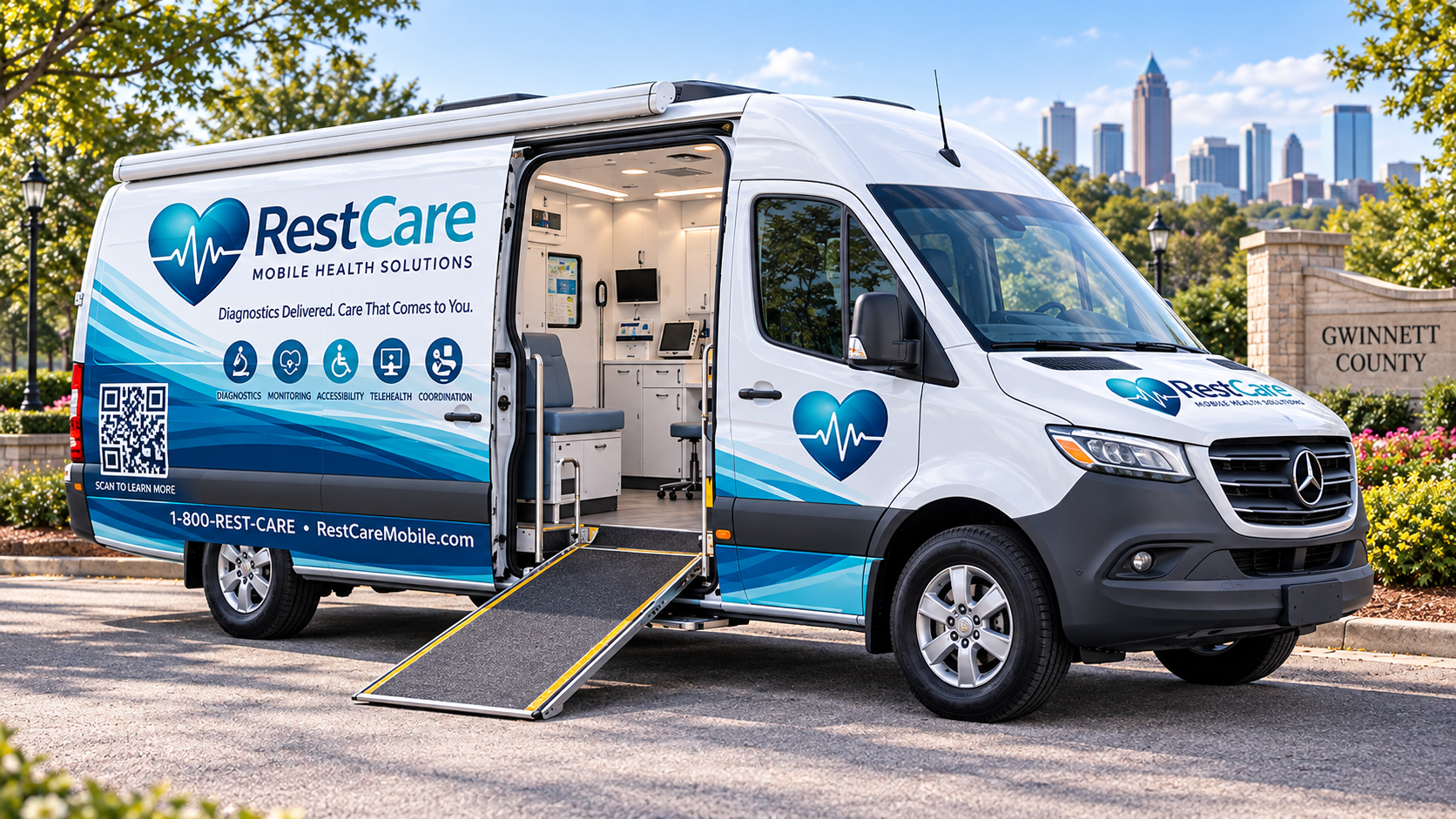
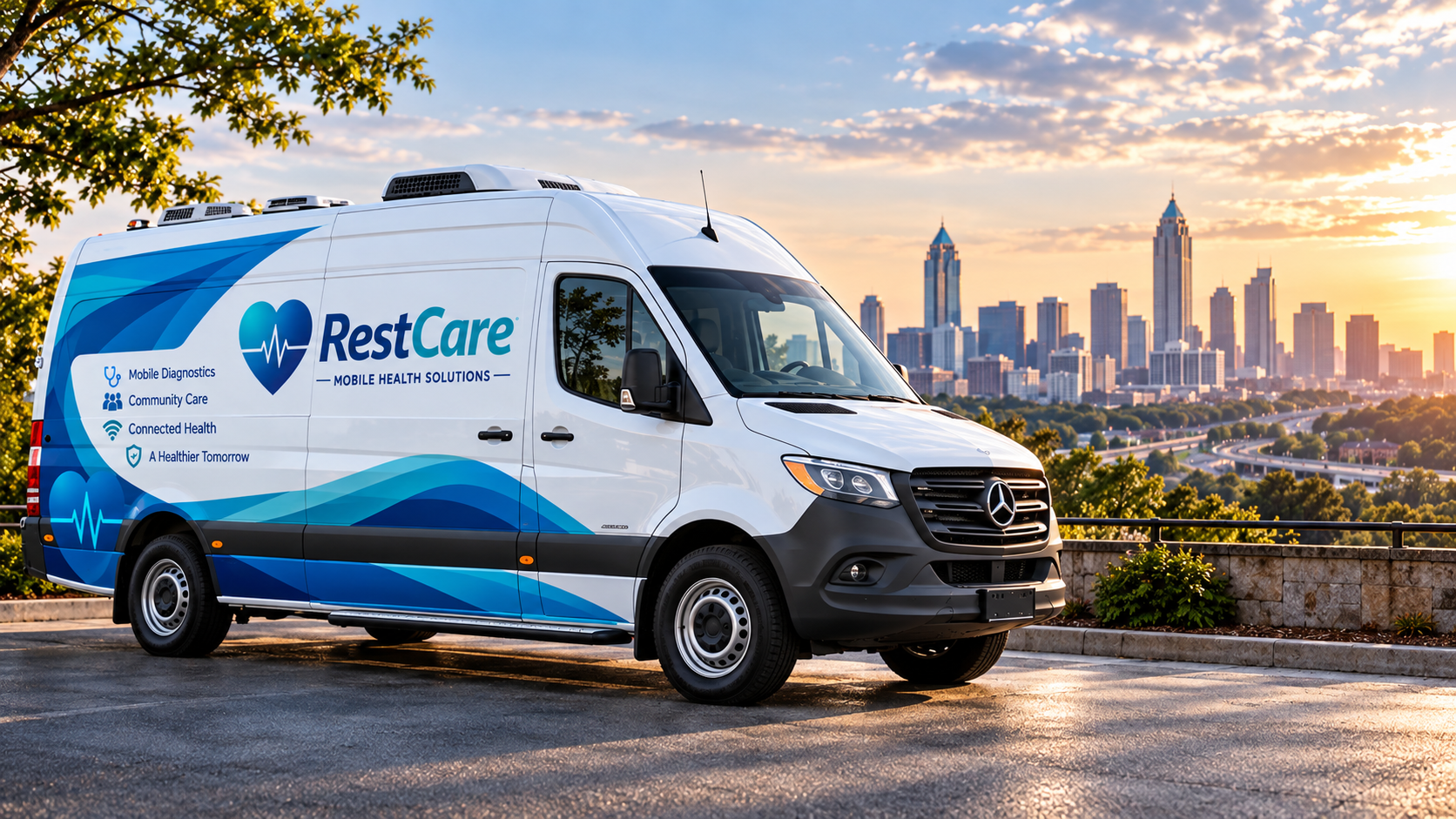
Approved RestCare Mercedes-Benz Sprinter exterior concept; future-state vehicle imagery
More than a vehicle.
A place to build access around the person.
↓
Thoughtful environments
People before process

RESTCARE IN PLAIN ENGLISH

HEALTHCARE ISN'T TRULY ACCESSIBLE IF THE PEOPLE WHO NEED IT CAN'T REALISTICALLY ACCESS IT.

Illustrative human stories · Not photographs of current RestCare patients or operations.

For some families, a healthcare appointment is just an appointment.

For others, it can become an entire operation.

It may mean rearranging work. Finding transportation. Coordinating caregivers. Preparing someone for an unfamiliar environment. Managing mobility challenges, sensory overload, anxiety, behavioral needs or communication differences.
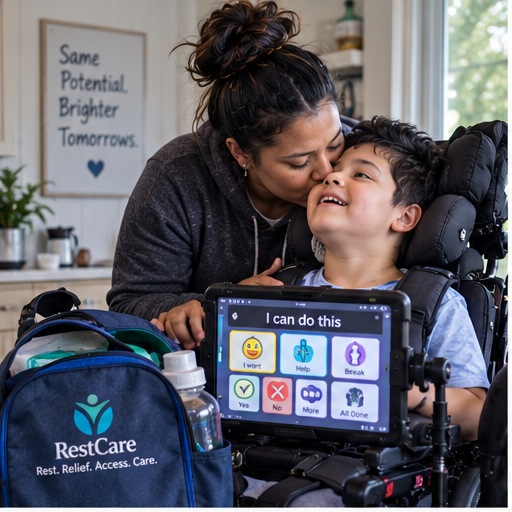
A caregiver and smiling child in a supportive wheelchair beside an AAC tablet and a packed bag.

It can mean wondering how long the wait will be. Whether the environment will be overwhelming. Whether the person you love will be understood. Whether you'll have to explain their needs all over again.

And sometimes, a family goes through all of that for a healthcare service that may take only a few minutes.
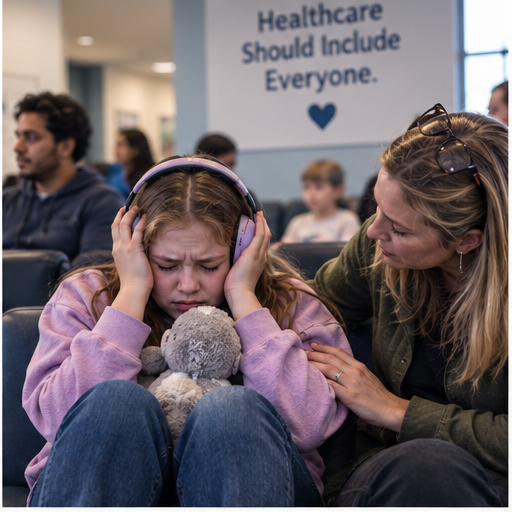
A young person holds headphones over their ears while a caregiver offers reassurance in a waiting room.

THAT IS AN ACCESS PROBLEM.

Sometimes the greatest barrier to healthcare isn't the care itself.

IT'S EVERYTHING STANDING BETWEEN THE PERSON AND THE CARE.

And when an encounter doesn't go well, it can be easy to describe the patient as “difficult,” the behavior as “the problem,” or the family as “hard to accommodate.”

RestCare starts with a different question:
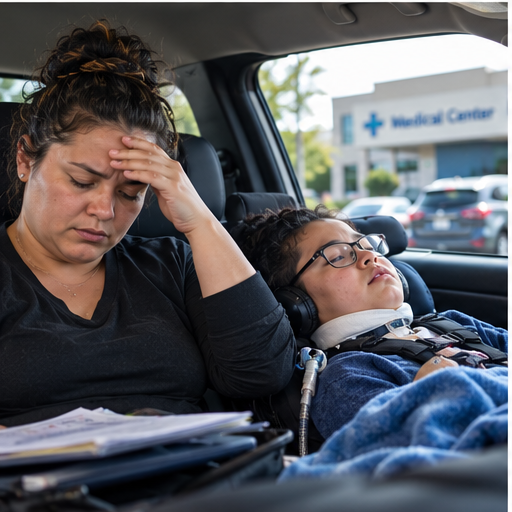
A caregiver sits with a person using substantial mobility and respiratory support inside a vehicle.

WHAT IF THE PERSON ISN'T THE PROBLEM?

WHAT IF WE CHANGED THE ENVIRONMENT, THE PROCESS, THE ACCESS POINT — OR THE WAY CARE REACHES THEM?

That's why we're building RestCare Mobile Health Solutions.

RestCare is building a technology-enabled healthcare access model designed to bring diagnostic access, clinical support, care coordination and continuity closer to the people who need them — especially neurodiverse, developmentally disabled, medically complex, behaviorally complex, overlooked and hard-to-reach individuals and families.

But RestCare isn't simply about taking the traditional healthcare system and putting it on wheels.
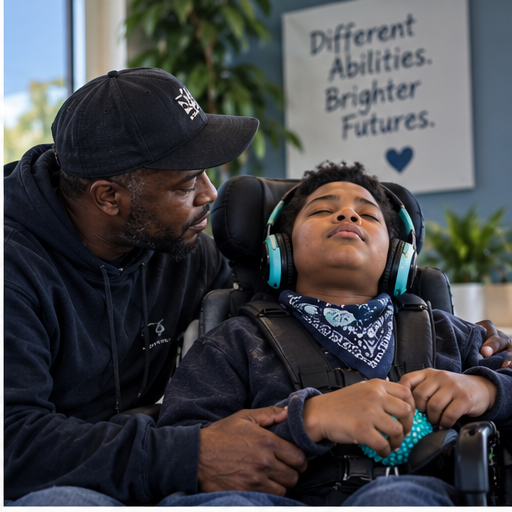
A caregiver sits beside a wheelchair user wearing headphones and holding a sensory object.

BEFORE WE CAN BUILD A BETTER WAY TO DELIVER CARE, WE HAVE TO UNDERSTAND WHY ACCESS BREAKS DOWN IN THE FIRST PLACE.

So before we open our doors, we're knocking on yours.

We're listening to families and caregivers. We're sitting with clinicians, facilities, pharmacies, community organizations and potential partners. We're asking what gets in the way, what people have learned, what they wish were different — and what a better experience could actually look like.

Because we don't want to build RestCare around assumptions.

WE WANT TO BUILD IT AROUND PEOPLE.

What we learn is helping shape the systems you'll discover throughout this site — OPEN DOOR™, NAP™, Mobile Triage™, connected care and the broader RestCare access model.

They may have different names and different functions, but they're being built toward the same purpose:
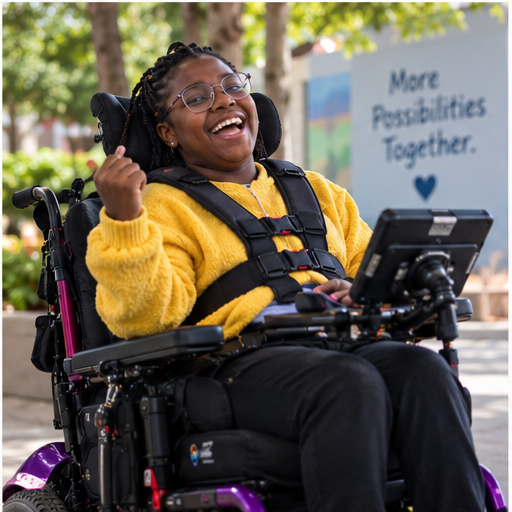
A smiling person in a power wheelchair gestures expressively beside their mounted tablet.

MAKE THE PATH TO CARE EASIER TO REACH, EASIER TO NAVIGATE AND BETTER PREPARED FOR THE PERSON TRAVELING IT.

We aren't asking people to become better at navigating a difficult system.

WE'RE WORKING TO BUILD A BETTER BRIDGE.
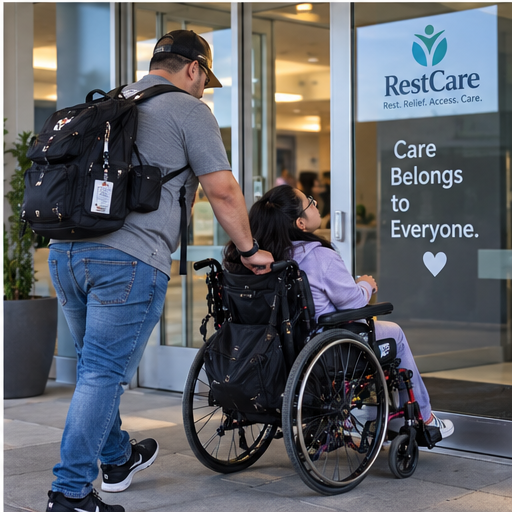
A wheelchair user and companion approach a doorway in an illustrative access scene.

BAN THE BLAME.
BUILD THE BRIDGE.

REST. RELIEF. ACCESS. CARE.
Rest. Relief. Access. Care.

A vision rooted in people

THE BURDEN

The problem is not the person.
The barrier is the system around them.

Ordinary healthcare can demand extraordinary effort when the environment, timing, or coordination does not fit the individual.

Ban the blame.
Build the bridge.

THE PERSON COMES FIRST

01 / HEAR THE EXPERIENCE

What makes access difficult?

Start with the person, the caregiver, and the effort behind the visit.

02 / UNDERSTAND THE BARRIER

What needs to change?

Look at the setting, the journey, and the handoffs—not blame.

03 / DESIGN THE BRIDGE

What could make it workable?

Let listening guide preparation, connection, and the next step.

See how OPEN DOOR™ starts with listening ↓
01

A setting that does not fit

Sensory demands, mobility needs, communication differences, developmental or intellectual disability, and behavioral complexity can make a standard care setting difficult to navigate.

02

A visit that is hard to reach

Transportation barriers, limited scheduling options, geography, and caregiver responsibilities can stand between an available appointment and a workable one.

03

A journey no one holds together

Medical complexity, repeated handoffs, and fragmented coordination can leave families carrying information and logistics between providers, facilities, and community resources.

ABOUT RESTCARE · FOUNDER LED

Field experience.
Careful listening.
A reason to build.

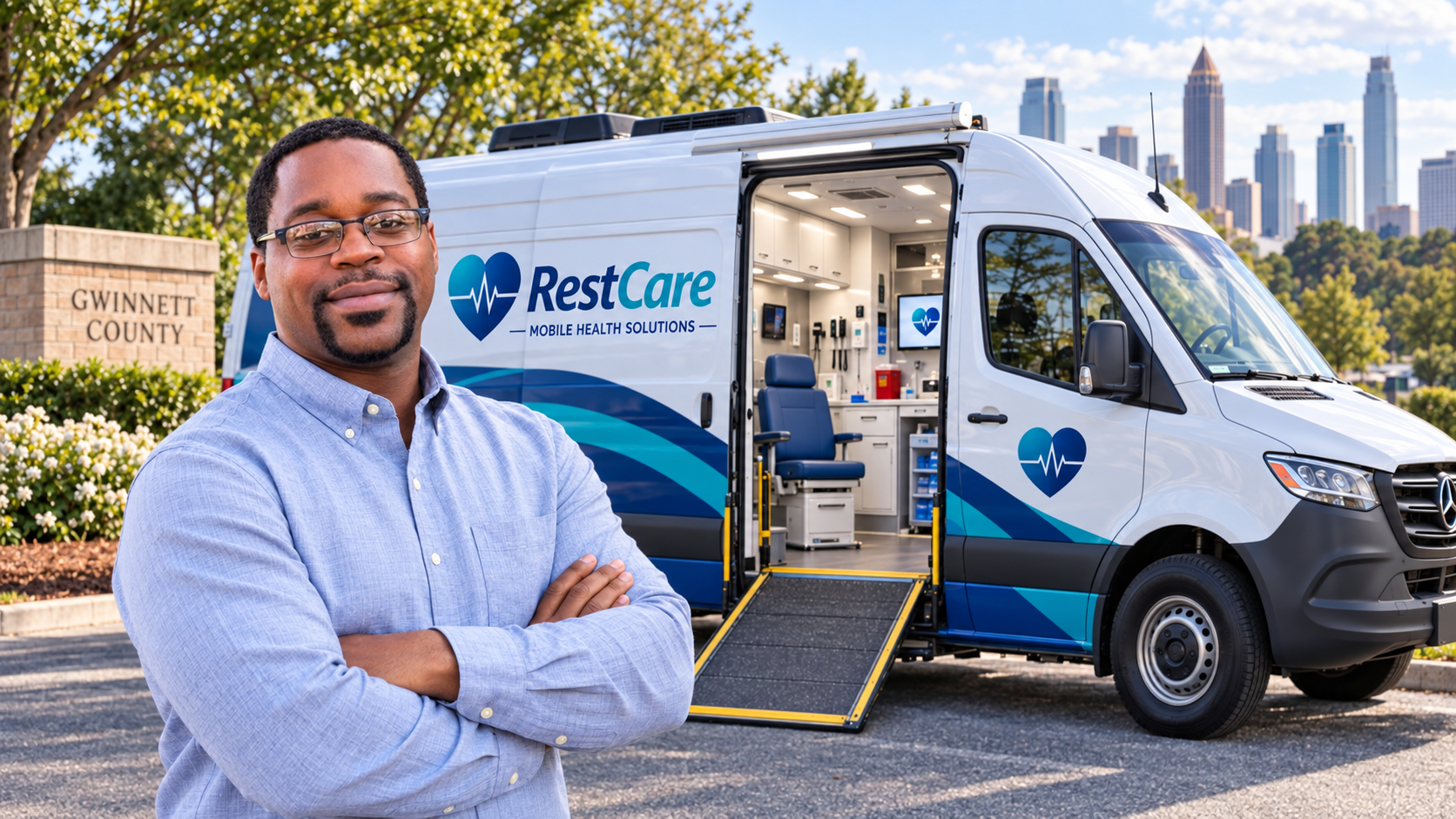
Approved founder and RestCare mobile-platform concept with Darnell Hurt; illustrative future-state setting
Approved founder / mobile-platform concept
DARNELL HURT
“Success happens when preparation meets opportunity.”

Founder-Operator / Field Intelligence Lead

Healthcare access is personal.
Our approach should be, too.

Darnell Hurt’s clinical field experience with individuals with developmental disabilities informs the decision to build RestCare. The focus is on what makes care difficult to access—and what families, caregivers, and care teams say would make the journey more workable.

RestCare Mobile Health Solutions LLC is a for-profit, technology-enabled healthcare access company in development. Its mission is to provide reliable diagnostic access, continuity, and coverage for overlooked and hard-to-reach individuals and families when traditional systems fall short.

That mission begins with listening, relationship-building, and readiness. Clinical services have not launched.

Darnell HurtFounder-Operator / Field Intelligence LeadRestCare Mobile Health Solutions LLC

Initial focus: Snellville, Grayson, Lawrenceville, and Loganville, within Gwinnett County and Metro Atlanta.

OUR OPERATING SEQUENCE

OPEN DOOR™ gathers perspectives. The Access Roundtable helps turn them into shared understanding.

  1. 01

    LISTEN

    Hear the experience through OPEN DOOR™.

  2. 02

    DISCERN

    Look for the barrier beneath the difficulty.

  3. 03

    UNDERSTAND

    Bring perspectives together at the Roundtable.

  4. 04

    SERVE

    Let the understood need guide solution design.

  5. 05

    INVITE

    Invite people and partners into a practical next step.

THE BRIDGE · HOW WE HELP

An access layer.
A more connected path to care.

RestCare is being designed to help connect the space between a person's needs and an appropriate care team or resource.

PLANNED ACCESS MODEL · NOT A CURRENT CLINICAL SERVICE

  1. 01 / BURDENStart with the personUnderstand the effort the individual, family, or organization is already carrying.

    The effort behind the visit

    A family may be managing transport, preparation, communication and multiple handoffs before reaching an appointment. Start by listening to that effort rather than attributing the difficulty to the person.

  2. 02 / BARRIERName what gets in the wayIdentify the environmental, scheduling, transport, communication, or coordination gap.

    Separate the need from the obstacle

    Ask which part of the journey creates friction: the setting, timing, physical pathway, information or transition. Different barriers call for different preparations.

  3. 03 / RESTCARE ACCESS LAYERBuild a workable touchpointDesign accessible ways for people and partners to connect around that need.

    Prepare around the person

    The developing NAP™ framework explores environmental and encounter preparation. OPEN DOOR™ brings lived and operational experience into that design.

  4. 04 / CONNECTION & COORDINATIONConnect the next stepHelp align appropriate resources, people, and information across fragmented settings.

    Make the handoff understandable

    The planned model asks who needs to connect, what information is appropriate to share, and who holds the next step. It does not promise a referral or established care relationship.

  5. 05 / APPROPRIATE CARE OR RESOURCEKeep the right team involvedThe relevant provider, pharmacy, facility, school, or community resource retains its role.

    Respect the appropriate scope

    The treating clinician or relevant organization retains responsibility for its role. Future RestCare capabilities depend on scope, oversight and readiness.

  6. 06 / RELIEF & CONTINUITYAim for less burdenThe intended result is a more workable care journey and better continuity—not a promised outcome.

    Return to listening

    Ask what remains difficult and what the next transition needs. Relief and continuity are design aims, not measured or guaranteed outcomes.

Alongside the existing care team.

RestCare is not being built to replace a person's PCP, treating clinician, health system, pharmacy, facility, school, or community organization. It is being built to help make the connections between them more workable.

Where we are today RestCare is pre-launch. Current invitations are for discovery, listening, and potential collaboration. Clinical services are not currently available.

Discuss an access barrier Explore NAP™ — preparation around the person Explore the three developing care models ↓

ONE BRIDGE · THREE DEVELOPING CARE MODELS

Preparation. Connection.
Continuity.

Three complementary models explore how RestCare could make access more workable. Each remains in development; clinical services have not launched.

PLANNED MODEL · PRE-LAUNCH

Mobile Triage™

A planned community touchpoint for assessment, appropriate specimen capture, telehealth connection and coordination. A bridge to continuity—not an emergency-care replacement.

Explore Mobile Triage™

PLANNED MODEL · PRE-LAUNCH

NAP™

Neurodiverse Access Protocol™ prepares around sensory, communication, mobility and caregiver needs, with dignity and flexibility built into the developing framework.

Explore NAP™

PLANNED MODEL · PRE-LAUNCH

RPM + Telehealth

A future model for remote patient monitoring, provider connection and coordinated follow-up, alongside the individual’s existing care team.

Explore RPM + Telehealth

THE MOBILE VISION

A setting designed
around access.

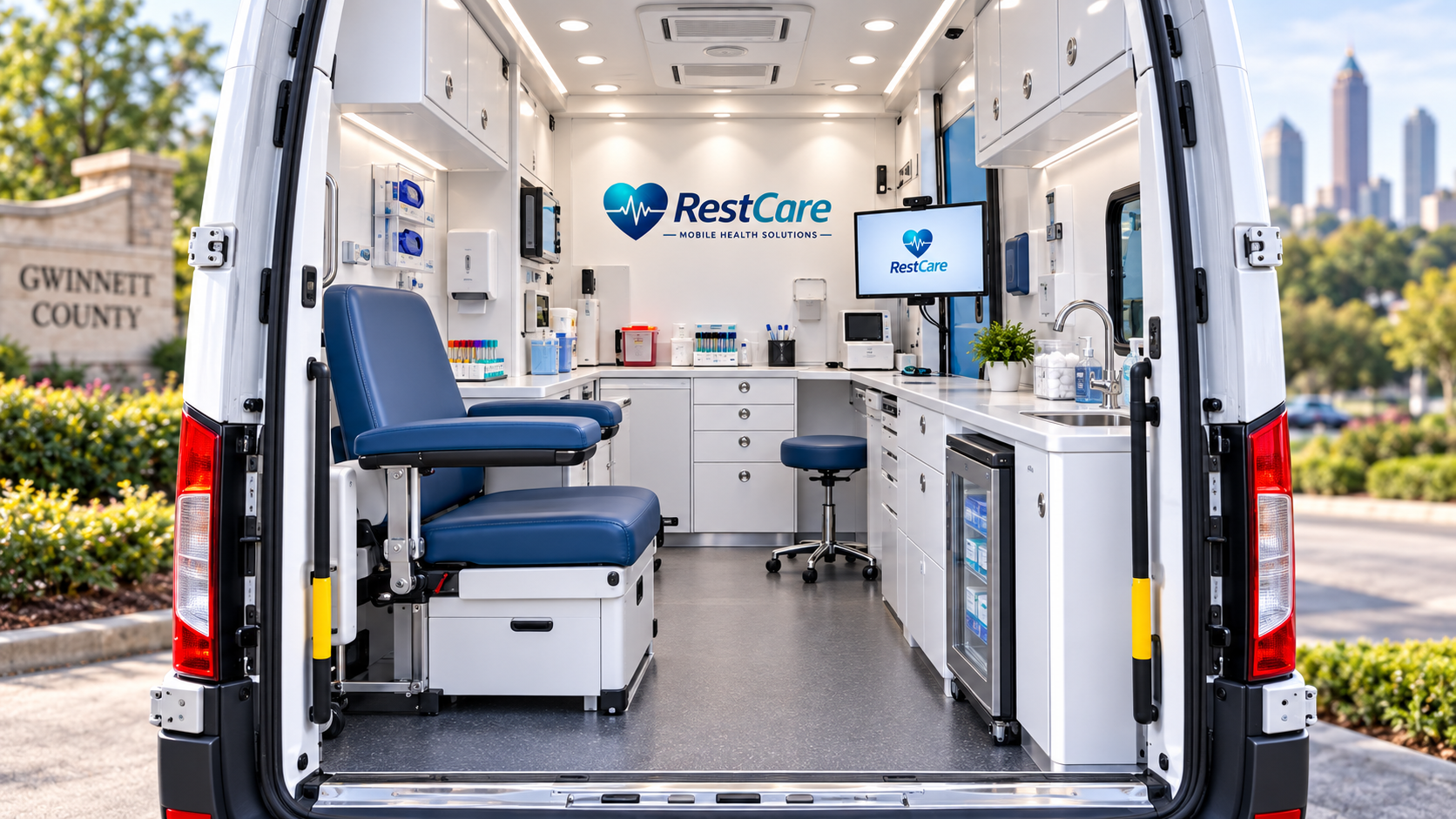
Approved concept imagery explores how a mobile environment could support preparation, connection, and clinical access. These are future possibilities, not available services.

Future-state mobile clinical interior showing the chair, cabinetry, sink, storage, work surfaces and clear aisle
FUTURE VISION

The environment is part of the pathway.

A clinical chair, space for a caregiver, an accessible entrance, or a connection to a remote clinician only matters when it supports the person and the care journey.

RestCare’s mobile concepts are a way to explore that fit—with scope, preparation, and clinical oversight guiding what could come next.

Prepared. Professional. Patient-Centered.
RestCare mobile-platform concept with the access ramp and open entrance visible; future vision
CONCEPT / FUTURE VISION

Access to the environment

Explore entry, mobility, and preparation needs before designing the encounter.

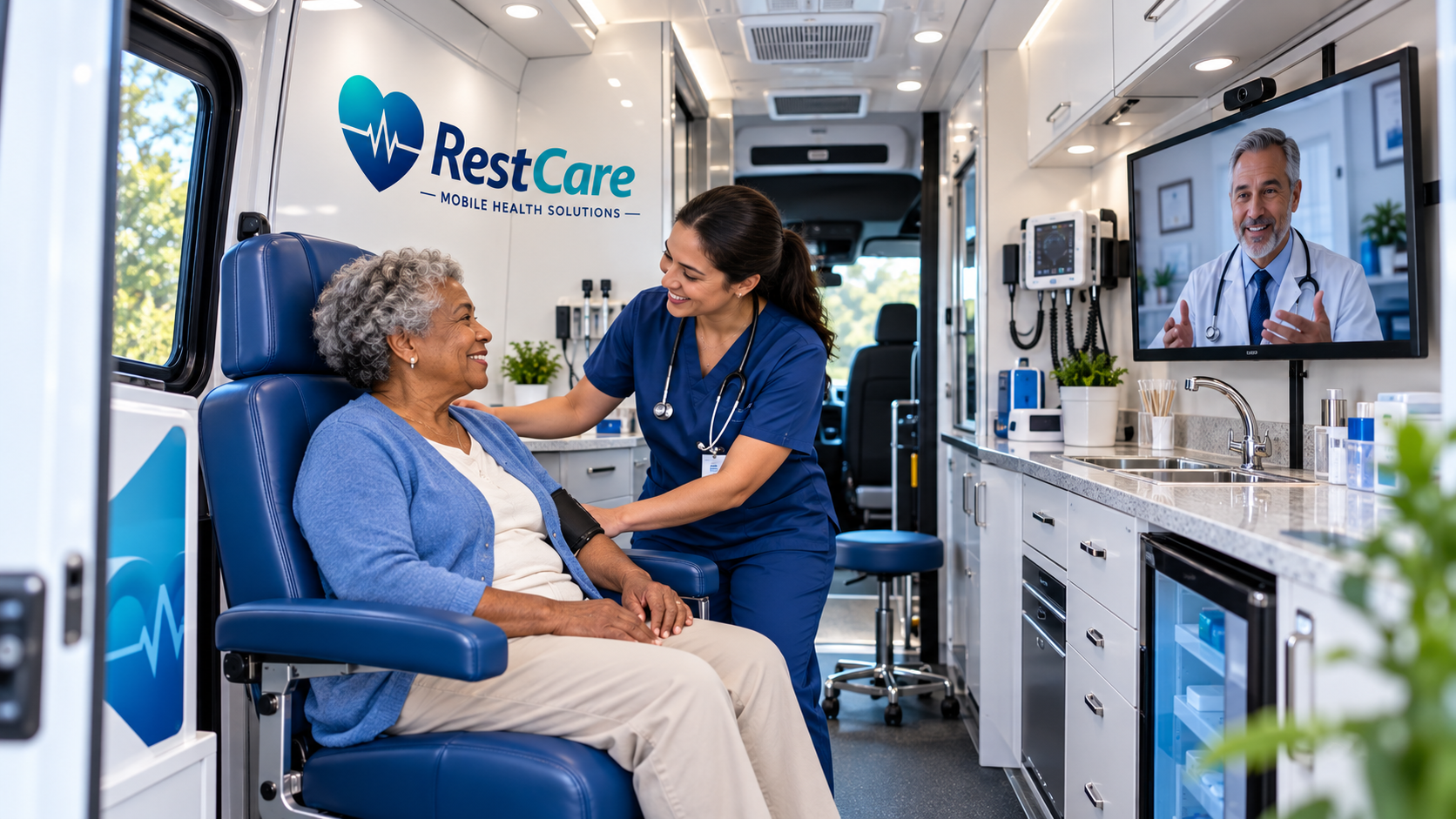
Concept of a patient and onsite clinician connecting with a remote provider inside a future RestCare mobile environment
CONCEPT / FUTURE VISION

Connection beyond the room

Explore how telehealth and coordinated information could support continuity.

MOBILE TRIAGE™ · FUTURE-STATE ACCESS & COORDINATION

From the encounter to the right next step.

A developing model for individuals whose access journey needs an appropriate assessment, connection or handoff, alongside their caregivers and existing care team.

  1. Assess

    Understand the encounter need within authorized scope.

  2. Capture

    Record relevant observations and information appropriately.

  3. Connect

    Identify the appropriate clinician or resource.

  4. Consult

    Enable an appropriate clinical conversation where available.

  5. Coordinate

    Clarify responsibility for the next step and continuity.

Planned model only. Clinical services have not launched. RestCare would support access and coordination; the appropriate primary or specialty care team retains its role.

Discuss a coordination barrier ↓

Potential diagnostic and specimen-capture capabilities depend on appropriate scope, oversight and readiness. Mobile Triage™ is not an emergency service or a replacement for primary or specialty care.

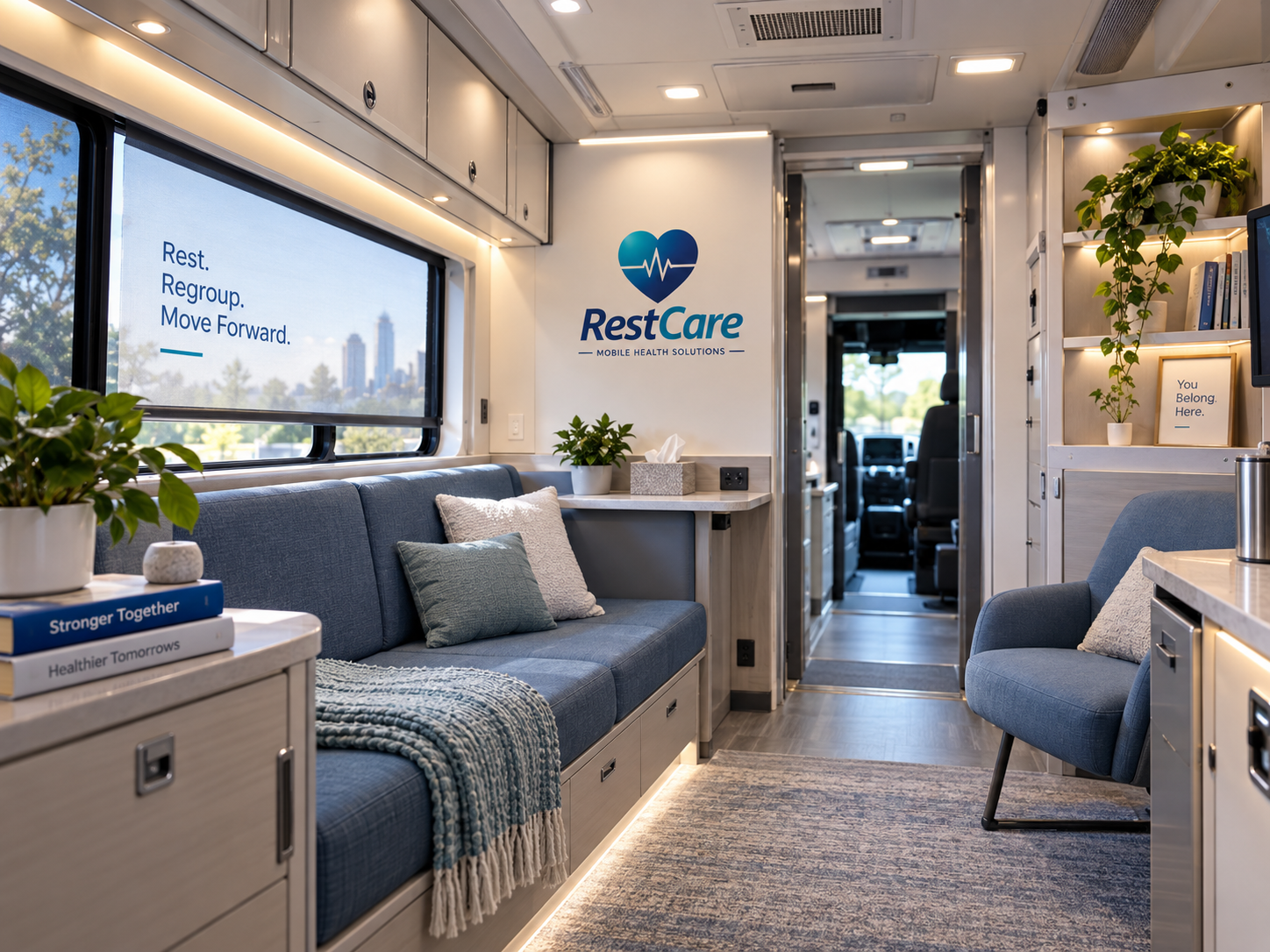
All vehicle and interior images shown here are supplied design concepts. They do not establish ownership, an operating fleet, available equipment, accessibility certification, or clinical availability.

NAP™ · NEURODIVERSE ACCESS PROTOCOL™

Adapt the environment.
Empower the encounter.

RestCare’s developing framework for preparing encounters around the person—before the encounter begins.

NAP™ is being designed for neurodiverse, developmentally disabled, sensory-sensitive, behaviorally complex, and medically complex individuals, alongside their caregivers and care teams.

It addresses the mismatch between a standard encounter and an individual’s sensory, communication, mobility, or transition needs. Preparation belongs in the access pathway.

In development. NAP™ is not clinically validated, is not deployed at scale, and has no outcome data presented here.

Discuss preparation needs ↓
Future-state sensory-aware mobile space with caregiver seating, soft furnishings and a clear interior pathway
Sensory-aware environment · Concept / future vision

A DEVELOPING PREPARATION PATHWAY · EXPAND EACH STEP

  1. 01Know the personCaregiver insight, communication and access needs.

    Listen to the individual and caregiver about communication preferences, sensory sensitivities, behavioral considerations, mobility requirements and what helps transitions feel more manageable.

  2. 02Prepare the environmentPlan before arrival.

    Consider lighting, sound, physical pathways, the arrangement of the space and preparation information before arrival. Environmental adaptation should respond to the person rather than assume one setting fits everyone.

  3. 03Adapt the encounterAllow for pacing and transition.

    Explore how communication, pacing, transitions and encounter support could be adapted within appropriate scope and oversight. This is a preparation model, not a clinical treatment protocol in service.

  4. 04Support the caregiver / care teamMake roles and support needs clear.

    Bring caregiver insight into planning and clarify the support needed during an encounter, while respecting the individual and the responsibilities of the care team.

  5. 05Connect the next stepCarry useful preparation forward.

    Consider what continuity information is appropriate for the next care setting and who should receive it through an appropriate, consent-based process. No private information is collected on this website.

Where NAP™ fits: OPEN DOOR™ informs the need. NAP™ explores preparation. Watchtower™ keeps readiness and scope in view. The appropriate care team retains its role.

RPM + TELEHEALTH · CARE COORDINATION

Keep the next step
connected.

A developing continuity model for individuals and families who need more workable connections between encounters, providers and resources.

Remote patient monitoring (RPM) and telehealth could help connect appropriate observations, clinical conversations and follow-up. The aim is useful information reaching the right team—not technology replacing a care relationship.

  1. Observe appropriately

    Explore remote measurements relevant to an individual’s care plan, with appropriate equipment and clinical oversight.

  2. Connect the care team

    Support telehealth consultation and appropriate information sharing with the PCP, specialist or other responsible provider.

  3. Coordinate follow-up

    Clarify who reviews information, who responds and what the next step needs. Monitoring does not imply continuous observation or emergency response.

What would need to be in place?

Appropriate scope, consent, secure information handling, equipment, clinical oversight and clear review and escalation responsibilities would need to be established before delivery. Real-time sharing would depend on the chosen systems and care arrangement.

This is a future-state model. RestCare is not claiming an active monitoring service, deployed technology platform or established provider partnership.

Discuss continuity and coordination ↓

THE INVITATION · RESTCARE OPEN DOOR™

“Before we open
our doors,
we’re knocking
on yours.
”

Join the Conversation

We go where the experience is.

OPEN DOOR™ is RestCare’s community and commercial listening and access strategy. We go directly to the people and organizations experiencing healthcare-access barriers before designing solutions.

The Community Door reaches the people. The Commercial Door explores the work. Small Pharma Door™ opens a focused conversation with independent pharmacies.

What we learn helps shape the questions brought to the RestCare Access Roundtable™ and the next steps we explore together.

SERVE, NOT SELL.

“Don’t enter the conversation trying to figure out what to say next. Enter trying to discover what matters to the person in front of you.”

This pre-launch listening strategy informs what RestCare builds. It is not a sales funnel or a promise of services.

  1. LISTENHear the person’s experience.
  2. DISCERNIdentify what matters beneath the difficulty.
  3. UNDERSTANDCheck the interpretation together.
  4. SERVELet the understood need guide design.
  5. INVITEAgree on a relevant next conversation.

↺ Return to listening · New perspectives inform the next cycle.

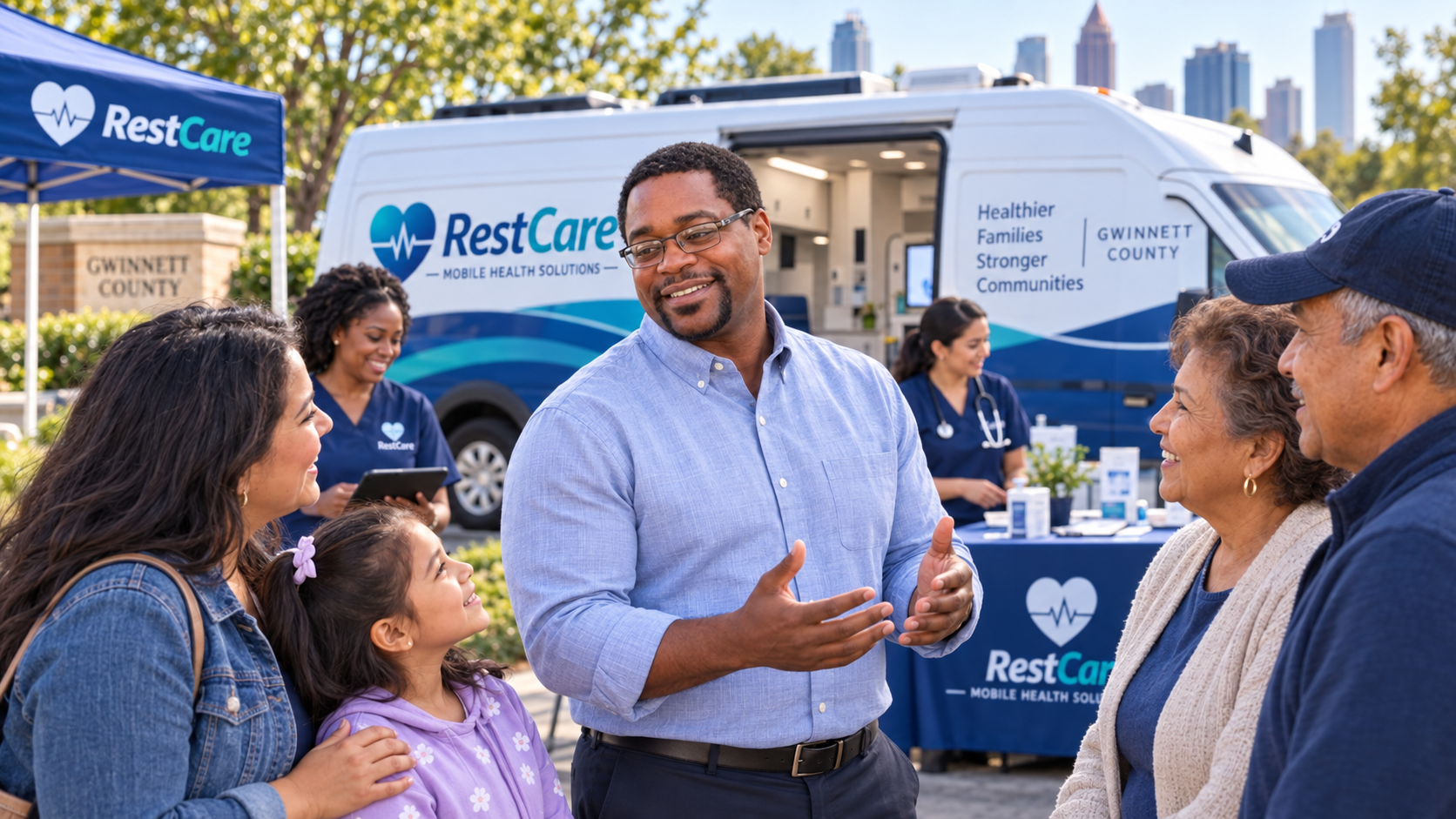
Approved concept of Darnell Hurt listening to families and community members beside a future RestCare mobile platform
Community outreach concept · Illustrative future-state setting

RESTCARE ACCESS ROUNDTABLE™

Different perspectives.
Shared understanding.

Caregivers & familiesCliniciansACCESS
ROUNDTABLE
Facilities & pharmaciesCommunity partners

LISTENING THAT INFORMS THE BUILD

A place at the table.
A voice in what’s next.

RestCare Access Roundtable™ is being developed as a collaborative forum for caregivers, families, clinicians, facilities, pharmacies, community organizations, and other access stakeholders.

Its purpose is to identify barriers, gather field intelligence—the practical knowledge people gain from experience—and co-design workable access solutions.

  1. Bring the experience.Share what makes access difficult in real settings.
  2. Build shared understanding.Compare perspectives and identify recurring gaps.
  3. Shape a practical next step.Use agreed themes and action items to inform OPEN DOOR™ and RestCare’s development.
Join the Conversation

Start with a conversation about participating. This is not event registration; no Roundtable dates are announced here.

PeopleLived, operational and clinical experience; community intelligence.
ConversationValidate barriers and compare perspectives.
Field intelligenceRecord shared themes and practical questions.
ActionAgree on next steps that can inform the build.
What could come out of a Roundtable?

Action items, field intelligence, potential future pilots, partnership opportunities and improvements to RestCare’s model. These are intended outputs, not announced pilots or established partnerships.

THE ENGINE · READINESS BEFORE DELIVERY

Preparation is part
of the promise.

“Opportunity is unpredictable; readiness is our responsibility.”

01 / UNDERSTAND THE PERSON

Neurodiverse access

NAP™ is an in-development concept for sensory and behavioral preparation. The purpose is to design with the individual’s needs in mind, without claiming validated outcomes.

IN DEVELOPMENTExplore Neurodiverse Access Protocol™ ↓
02 / PREPARE THE WORK

Watchtower™ readiness

Watchtower™ is RestCare’s readiness concept: keeping preparation, scope boundaries, and the requirements for future delivery in view while the company is being built.

PRE-LAUNCH READINESS
How the readiness layer supports the model
Readiness
Identify what must be prepared before a capability can be offered.
Oversight
Keep appropriate scope and governance requirements in view.
Sequencing
Put preparation and dependencies before delivery.
Blocker removal
Surface unresolved requirements and clarify the next step.

For RestCare’s development and potential collaborators, Watchtower™ sits behind delivery concepts. It remains a pre-launch readiness model, not evidence of operational approval.

Discuss readiness collaboration ↓
03 / CONNECT RESPONSIBLY

Technology with a purpose

The intended role of technology is to support accessible touchpoints, useful information, and continuity between people and appropriate resources.

PLANNED MODELExplore the coordination pathway ↓
GOVERNING PRINCIPLE FOR FUTURE CLINICAL WORK

Medical Director governs protocol.
PCP governs patient.

A governance principle, not a claim that clinical services, a medical-director appointment, or a particular care relationship are already established.

Clinical services have not launched. Future capabilities depend on appropriate scope, oversight, readiness, and release decisions.

RESTCARE ACCESS FLYWHEEL™

Listening informs the work.
The work informs what comes next.

A planned reinforcing cycle: community insight shapes access design; future delivery and follow-up would create learning that informs the next round.

  1. Community engagementOPEN DOOR™ gathers lived and operational experience.
  2. Care deliveryFuture Mobile Triage™ and NAP™ capabilities would respond to understood needs.
  3. Connected carePlanned telehealth, RPM and coordination would support the next step.
  4. Better outcomesAn intended direction to evaluate—not a claim of measured results.
  5. Growth / greater accessLearning and potential relationships could inform responsible expansion.

↺ Return to listening: what is still difficult, and what should change?

Enter through OPEN DOOR™ ↓

This graphic describes the future operating vision. It does not establish current clinical delivery, outcome data, contracts or partnerships.

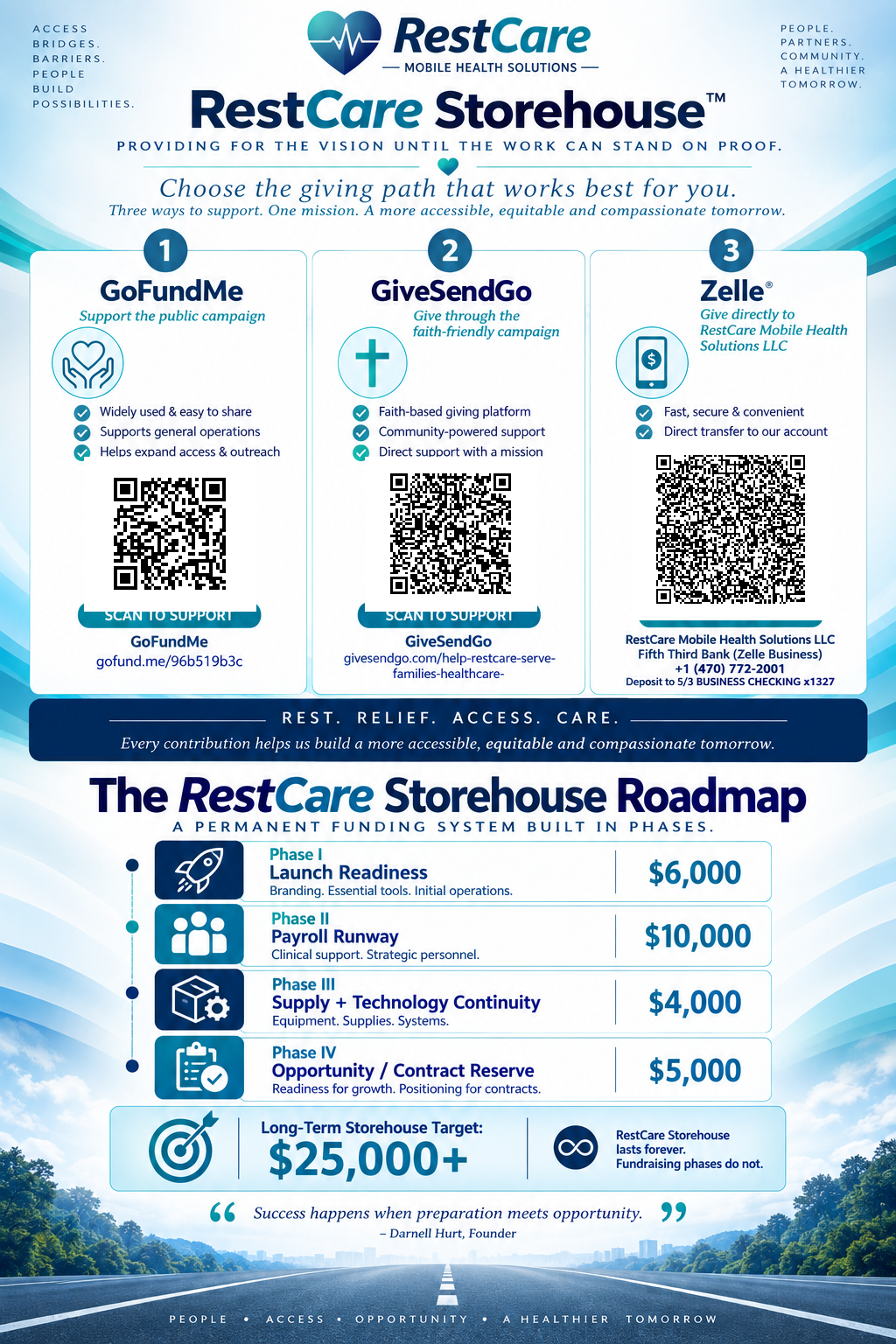
RESTCARE STOREHOUSE™

Providing for the vision
until the work can stand on proof.

Storehouse is RestCare’s support mechanism for moving from preparation toward proof and readiness. It gives supporters a way to stand behind the mission while the company is being built.

Support is intended to help prepare the foundation for practical access, continuity, and coverage for overlooked and medically complex families.

ONE STOREHOUSE. MULTIPLE ENTRANCES.

$6,000 Phase I goal

The goal is a target, not an amount raised. No combined progress total is presented here.

GoFundMeGiveSendGoZelle business

These are the three support entrances. Contact Darnell for verified channel details.

Ask about supporting Storehouse ↓

RestCare Mobile Health Solutions LLC is a for-profit company. Support is not a charitable donation and is not tax deductible.

RestCare Storehouse funding paths and roadmap with verified QR codes for GoFundMe, GiveSendGo, and Zelle Business.
Verified Storehouse support paths: GoFundMe, GiveSendGo, and Zelle Business.

THE NEXT STEP · CONTACT & SCHEDULE

Your perspective
could shape
what comes next.

Start with an Access Conversation with Darnell. Share a general barrier, explore a relationship, or ask about participating.

LET’S START WITH A CONVERSATION

What would better access look like for you?

Choose a topic or go directly to Calendly to find a time with Darnell.

Schedule an Access Conversation

Opens Calendly in a new tab. Mention your selected topic when scheduling; this page does not submit it.

This is a discovery conversation, not a clinical appointment. Please do not share diagnoses, medical records, or other private medical information.

RestCare infographic

Scroll to inspect the full-resolution graphic. All imagery describes a planned, pre-launch model.